
1
Fuga a 4 Voci
2
Preludio E Fuga
3
Comunione (Meditazione)
4
Adagio
5
Largo
6
Aria
7
Prelude ; Fugue for Piano, Op. 35/1-Fuga (Ib)
8
Suite for Solo Cello No. 6 in D Major, BWV 1012-4. Sarabanda
9
Canzone Alla Francese la Lucchesina
10
Elevazione
11
Largo
12
Elevazione
13
Pastorale
14
Ecce Sacerdos a 5 Voci Dispari Con Organo
15
Ave Maria in Modo Misolidio a 4 Voci Dispari a Cappella
16
Benedicite Dominum, Mottetto a Una Voce E Organo
17
Missa Puerorum in Honorem Sancti Johannis Bosco-Kyrie
18
Missa Puerorum in Honorem Sancti Johannis Bosco-Gloria
19
Missa Puerorum in Honorem Sancti Johannis Bosco-Credo
20
Missa Puerorum in Honorem Sancti Johannis Bosco-Sanctus
21
Missa Puerorum in Honorem Sancti Johannis Bosco-Benedictus
22
Missa Puerorum in Honorem Sancti Johannis Bosco-Agnus Dei
23
Ave Maria, Mottetto a Una Voce E Organo
24
Salve Regina, Mottetto a Una Voce E Organo
25
Benedicta Es Tu, Mottetto a Una Voce E Organo
26
Musetta Per Flauto E Organo
27
Idillio Sul Lago
28
Sonata for Solo Violin No. 2 in a Minor, BWV 1003-3. Andante
29
Liebster Jesu BWV 731
Item UPC: 8007194200768
Date First Available:
Label: TACTUS RECORDS
ABOUT THE ALBUM
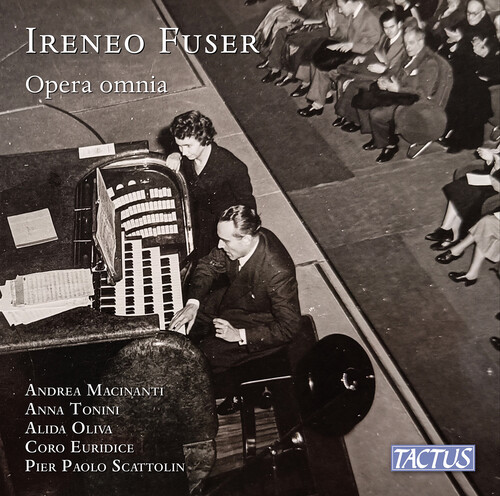
Ireneo Fuser was born in Carbonera (Treviso) on 12 November 1902. In 1925, he graduated in organ at the Liceo musicale «Benedetto Marcello» in Venice under the tuition of Oreste Ravanello and later specialized in Rome with Fernando Germani. In 1927, he graduated in piano at the Conservatory in Parma and, in 1935, in composition at the Conservatory in Florence. In 1928, he won the competition to succeed Ulisse Matthey as organist at the Sanctuary of Loreto, a position he did not hold, however. He undertook a brilliant concert career that was marked by a broad repertoire, refined recording skills, great virtuosity, and musical sensitivity that made him one of the most important Italian organists of his generation. From the 1940s onwards, he has given organ recitals for Swiss radio and RAI in live or recorded Sunday programmes in Rome and Turin, which have been on the broadcast schedules for more than twenty years. At the same time, he carried out teaching activities first at the Licei musicali in Venice and Pescara and then in Bologna, where he was established in 1939 as an organ teacher at the Institute that three years later would become the Conservatorio «G. B. Martini». A firm believer in the phonic excellence of the ancient Italian organ, he shaped his activity with the noble aim of enhancing the glorious period of Italian musical art of the past; among his countless musicological works, the anthology «Classici italiani dell'organo» (1955) is still considered a reference work today.
Check out these titles
Cursum Perficio
Anthrax
Suicide Season
Bring Me The Horizon
Color Outside The Lines
Cortis
Foreign Tongues
The Rolling Stones
GREENGREEN
Cortis
Chuck Timely & The Hourglass
Role Model
Bass Persuades
Miley
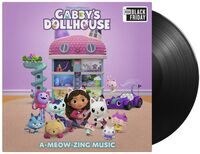
A-Meow-Zing Music
Gabby's Dollhouse: The Movie / O.S.T.
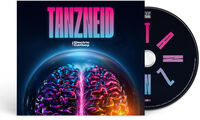
TANZNEID
Electric Callboy
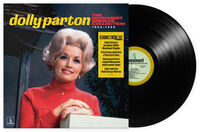
The Monument Singles Collection 1964-1968
Dolly Parton

