

1
S'posin'
2
Copper Colored Gal
3
I'm at the Mercy of Love
4
Floatin' Down to Cotton Town
5
La-De-De, La-De-Da
6
Hallelujah! Things Look Rosy Now
7
Hallelujah! Things Look Rosy Now - (instrumental)
8
'Tain't Good (Like a Nickel Made of Wood)
9
'Tain't Good (Like a Nickel Made of Wood) - (instrumental)
10
Swingin' Them Jingle Bells
11
Swingin' Them Jingle Bells - (instrumental)
12
Thousand Dreams of You, A
13
Thousand Dreams of You, A - (instrumental)
14
Rhyme for Love, A
15
I Adore You
16
Havin' a Ball
17
I'm Sorry I Made You Cry
18
Who's Afraid of Love?
19
Please Keep Me in Your Dreams
20
One in a Million
21
Nero
22
You're Laughing at Me
23
I Can't Break the Habit of You
24
Did Anyone Ever Tell You?
25
When Love Is Young
26
Meanest Thing You Ever Did Was Kiss Me, The
27
Cryin' Mood
28
Where Is the Sun?
Item UPC: 788065904821
Date First Available:
Label: JSP RECORDS
ABOUT THE ALBUM
If you've encountered Volumes 1, 2 and 3 you'll know that Fats started life running and rarely slowed down. Born in New York in 1904, he showed early signs of the gifts that would sustain him throughout his career - musical skill and unlimited charm. Aged sixteen, he attached himself to the circle of James P Johnson, a leading stride pianist - and traces of the stride style would feature in virtually all Fats' work. He first recorded in 1922. For a time he was used as an accompanist for recording sessions before, in 1926, recording under his own name. From then until his death he was a star whose output and series of hits was unmatched. In 1929, Fats recorded what is generally accepted as the first jazz recording with a band composed of black and white musicians. Routine now, it was revolutionary then. By the time of the opening tracks here, Fats had married Edith, separated (she was in eternal pursuit of him for alimony) and had set up a new household with the more tolerant Anita. He was a leading recording star, appeared frequently on radio and was almost continually taking a show on tour. He had also appeared to good effect in a couple of Hollywood movies. His records sold in North America and throughout the free world. By September 1936, the personnel of Fats' band had settled onto the musicians listed in the discography. There would be few changes from now on. 1936 was spent mainly on the road. Fats was under financial pressure from the IRS and his ex-wife, Edith - it would be difficult to calculate who was the more formidable. In addition, his recording company was constantly pressing for more sessions. If this sounds like a treadmill, it was - justified by the fact that Fats was almost infallible in the recording studio - his bonhomie, invention and virtuosity rarely deserting him.
Check out these titles
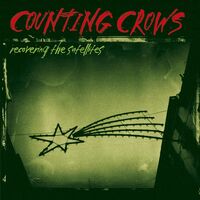
Recovering the Satellites
Counting Crows

petal
Ariana Grande
Look Outside Your Window
Look Outside Your Window

Danger Days: The True Lives of the Fabulous Killjoys - Deluxe Edition
My Chemical Romance

Friends of Jesse Malin: I Would Do It For You Vol 1.
Jesse Malin
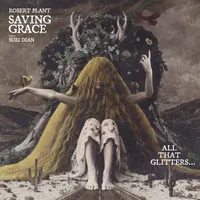
Saving Grace: All That Glitters… with Suzi Dian
Robert Plant
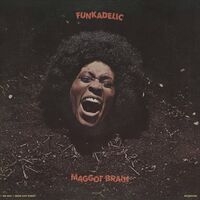
Maggot Brain - 2026 Reissue
Funkadelic

Siamese Dream (RSD Essential) -
Smashing Pumpkins
GREENGREEN
Cortis

Reflections
From Ashes to New

