
1
I Will Not Be Removed
2
Everybody's Got to Be Tried
3
I'll Be Satisfied
4
Take Your Burden to the Lord
5
I Wish My Mother Was on That Train
6
Just Beyond Jordan
7
Half Ain't Never Been Told, The
8
C&O Blues
9
Storm Is Passing Over, The
10
God's Gonna Separate the Wheat From the Tares
11
Been Listening All the Day
12
Goin' to Rest Where Jesus Is
13
There's a Hand Writing on the Wall
14
Scandalous and a Shame
15
I've Crossed the Separation Line
16
Lord Don't Drive Me Away
17
Religion Is Something Within You
18
Mother's Love
19
Wonder Will My Troubles Then Be Over
20
Strange Things Happening in the Land
21
Waded in the Water Trying to Get Home
22
He Done What the World Couldn't Do
23
Satan Your Kingdom Must Come Down
24
I Ain't No Sinner Now
25
Pressin' up That Shiny Way
26
In That Pearly White City Above
27
In That Pearly White City Above
Item UPC: 788065775926
Date First Available:
Label: JSP RECORDS
ABOUT THE ALBUM
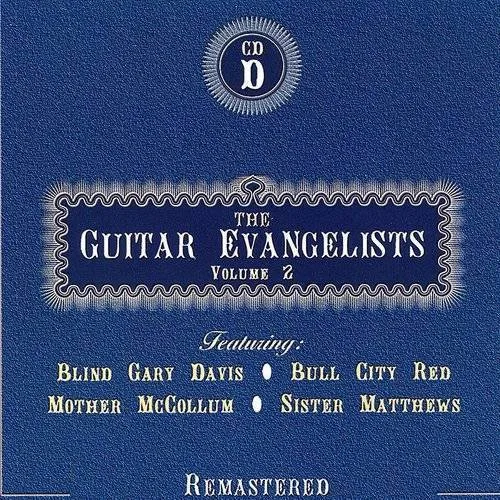
4 disc set. During the 1930s and onto the 1950s, street musicians were common. In rural areas they followed a seasonal path - they were around just as the crops came in and workers had money. In cities they would play anywhere they could find a generous audience. Many of them restricted themselves to religious material. Most of these singers accompanied themselves on the guitar and had any combination of three reasons for singing for tips: they might blind; they might be escaping more arduous work; they might be true evangelists. Which combination applied to Blind Joe Taggart remains in doubt. Josh White said that Taggart wasn't totally blind. He also precludes any idea that Taggart was concerned for the souls of others. And it seems certain that he was not above singing blues if there was money in it. Gary Davis' main fame came later in life when he was catering to a mainly white blues audience. He was another complex character - probably the greatest working class African American guitarist who became the mentor and guitar guide to at least two generations of musicians, the first made up from his black contemporaries, and a later one composed of almost every young white guitarist who heard him play and managed to attend the 'school' that Davis set up in his house. Although intransigent, Davis was never the ogre that Taggart was and his many students remember him with much affection. Similarly, he was not averse to playing the blues. For all his mastery and skill Davis never made anything like the impact on the black record buying public that his acolyte Fuller achieved. This could be because after July of 1935, when he recorded two blues, he restricted his output to religious numbers. He was dissatisfied with his treatment by J. B. Long of ARC, the company involved, and after this extended session refused to make further recordings for them. Also featured here are singers like Gussie Nesbit, Willie Eason and Mother McCollum - less well-known, but no less compelling.
Check out these titles

Growth
Olivia Dean

Born to Kill
Social Distortion

TANZNEID
Electric Callboy

Doomnuts (purple Vinyl)
J Dilla & Mf Doom & J Villain
Cursum Perficio
Anthrax

Yearning: The Unbeautiful After
Boundaries
Days
Mountain Goats
Role Model Hermit
Mary In The Junkyard

Xscape
Michael Jackson

A Million Knives
the Velveteers

