1
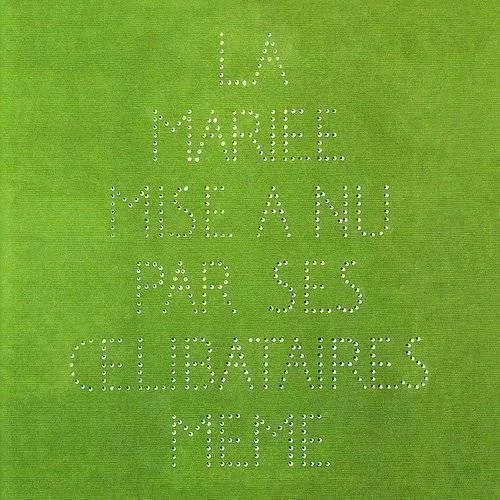
Erratum Musical (La mari‚e mise … nu par ses c‚libataires, mˆme)
2
Creative Act, spoken lecture, The
3
A l'infinitif (In the Infinitive), spoken reading
4
George Heard Hamilton interviews Marcel Duchamp, 1959: [Part 1]
5
George Heard Hamilton interviews Marcel Duchamp, 1959: [Part 2]
6
Erratum Musical (La mari‚e mise … nu par ses c‚libataires, mˆme)
7
Erratum Musical (La mari‚e mise … nu par ses c‚libataires, mˆme)
8
Erratum Musical (La mari‚e mise … nu par ses c‚libataires, mˆme)
9
Erratum Musical (La mari‚e mise … nu par ses c‚libataires, mˆme)
10
Erratum Musical (La mari‚e mise … nu par ses c‚libataires, mˆme)
11
Erratum Musical (La mari‚e mise … nu par ses c‚libataires, mˆme)
12
Erratum Musical (La mari‚e mise … nu par ses c‚libataires, mˆme)
13
Erratum Musical (La mari‚e mise … nu par ses c‚libataires, mˆme)
Item UPC: 5024545483222
Date First Available:
Label: LTM
ABOUT THE ALBUM
LTM is pleased to announce the release of a new CD by influential avant-garde artist Marcel Duchamp, featuring two interpretations of his Musical Erratum for piano, together with four spoken word extracts. Written in 1913, the Musical Erratum for piano forms part of the sequence of notes and projects which led to Duchamp's celebrated artwork, La Mariée mise à nu par ses célibataires, même (The bride stripped bare by her batchelors, even, often called the Large Glass). La Mariée is also the sub-title of the 1913 piano work. Abstract, elusive and even 'inachievable' according to the artist, the Musical Erratum consists of two scores. In the first, notes are replaced by numbered keys, and virtuoso performance is discouraged in favour of novel mechanical instrumentation. The second offers a form of random composition, by which numbered balls are dropped into the moving wagons of a toy train. Famously, Duchamp described the whole as 'a very useless performance, in any event.' Two versions are included on this new CD, including a conventional (but non-virtuoso) performance on piano, and another on which spinning rotary discs brush the piano strings to produce extraordinary tones. The extended 74 minute CD also includes four spoken word extracts by Duchamp (English language), including a fascinating lecture delivered in Houston in 1957, the Creative Act, and a lengthy interview recorded in 1959.
Check out these titles
Happier Now
Movements
Saving Grace: All That Glitters… with Suzi Dian
Robert Plant
Shapes Of Midnight
Uncle Acid & The Deadbeats
Fortnight
Taylor Swift

Suicide Handbook
Ryan Adams
bones
Rainbow Kitten Surprise
Cursum Perficio
Anthrax
Czarface Meets Frankie Pulitzer
Czarface
Life Is Peachy - 30th Anniversary
Korn
Live At Easy Street Records Vol II
Brandi Carlile