
1
Symphony in C Major, 1st Movement: Allegro Vivo
2
Symphony in C Major, the Second Movement: Adagio
3
Symphony in C Major, the Third Movement: Scherzo. Allegro Vivace
4
Symphony in C Major, the Fourth Movement: Finale. Allegro Vivace
5
Pavane for Dead Princess
6
Ballet Music «Ma Mail Roi» Prelude
7
Ballet Music «Ma Mail Roi» First Field: Spinning Wheel of Dance and Scene
8
Ballet Music «Ma Mail Roi» Second Field: Sleeping Beauty of Pavane
9
Ballet Music «Ma Mail Roi» Third Field: Beauty and the Beast of Dialogue 1
10
Ballet Music «Ma Mail Roi» Fourth Field: Thumbling 1
11
Ballet Music «Ma Mail Roi» Fifth Field: Pagoda of Queen Redoronetto 1
12
Ballet Music «Ma Mail Roi» Finale: Fairy Garden 1
13
Suite «Tomb of Couperin»
14
Prelude: Vif 1
15
Suite «Tomb of Couperin»
16
Forlane: Allegretto 1
17
Suite «Tomb of Couperin»
18
Menuet: Allegro Moderato 1
19
Suite «Tomb of Couperin»
20
Rigaudon: Assez Vif 1
21
Ballet Suite «Pulcinella» (1949 Edition)
22
Sinfonia 1
23
Ballet Suite «Pulcinella» (1949 Edition)
24
Serenata 1
25
Ballet Suite «Pulcinella» (1949 Version)
26
Scherzino - Allegro - Andantino 2
27
Ballet Suite «Pulcinella» (1949 Edition)
28
Tarantella 2
29
Ballet Suite «Pulcinella» (1949 Edition)
30
Toccata 2
31
Ballet Suite «Pulcinella» (1949 Edition)
32
Gavotta Con Due Variazioni 2
33
Ballet Suite «Pulcinella» (1949 Version)
34
Vivo 2
35
Ballet Suite «Pulcinella» (1949 Edition) 8A. Minuetto 2
36
Ballet Suite «Pulcinella» (1949 Edition) 8B. Finale 2
37
Concerto in D Tone First Movement: Vivace 2
38
Concerto in D-Tone Second Movement: Arioso. Andantino 2
39
Concerto in D-Tone Third Movement: Rondo. Allegro
Item UPC: 4988005866820
Date First Available:
Label: IMT
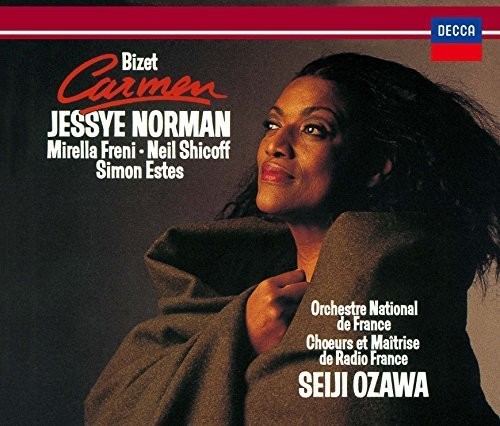
Bizet: Carmen
Pick from
2 formats and editions
Starting at
CD
Unavailable
CD - Import
Unavailable
ABOUT THE ALBUM
Seiji Ozawa (Artist, conductor), Norman (Jesse) (Artist), Shikofu (Neil) (Artist). Jessye Norman is one of the most celebrated artists of our century. She is also among the most distinguished in a long line of American sopranos who refused to believe in limits, a shining member of an artistic pantheon that has included Rosa Ponselle, Maria Callas, Leontyne Price and now this daughter of Augusta, Georgia. "Pigeonholing," said Norman, "is only interesting to pigeons." Norman's dreams are limitless, and she has turned many of them into realities in a dazzling career that has been one of the most satisfying musical spectacles of our time. She has been equally at home in American spirituals, French chansons or German Lieder. In opera, she has made her own Wagner's Sieglinde and Elisabeth but also Gluck's Alceste, Mozart's Countess Almaviva, Strauss' Ariadne and Stravinsky's Jocasta. She has conquered centuries of musical styles, bringing to life not only Purcell's Dido but the Dido of Berlioz, Beethoven's Leonore and also Bizet's Carmen. She has been an earthy temptress in the opera Parsifal, an unfortunate bride in Bluebeard's Castle and a wise old nun in Dialogues of the Carmelites. From Haydn to Mahler to Schoenberg and Berg, from Satie and Poulenc to Gershwin and Bernstein, the range of Norman's musical reach has been and continues to be breathtaking. No matter what the language, she makes every word matter, every note tell. She is a diva in the truest sense, in that there is something of the divine in the music she makes. That voice has been a sweet caress for audiences all over the world. Japanese Blu-spec CD 2 pressing. Universal. 2015. One of the world's leading conductors for half a century, Seiji Ozawa has become an icon for concert and opera audiences in Europe, North America and Japan, as well as a steadfast advocate for young musicians. His countless recordings and television appearances have contributed mightily to his celebrity, and the many honors and achievements bestowed upon Maestro Ozawa in recent years have further underscored his international standing. He was born in 1935 in Mukden, Manchuria (now Shenyang, China), and graduated with first prizes in both composition and conducting from Tokyo's Toho School of Music. In 1959 he won first prize at the International Competition of Orchestra Conductors in Besançon, France, where he came to the attention of Boston Symphony music director Charles Munch, who invited him to Tanglewood, where he won the Koussevitzky Prize as the outstanding student conductor in 1960. While working with Herbert von Karajan in Berlin, Ozawa came to the attention of Leonard Bernstein, who appointed him assistant conductor of the New York Philharmonic for the 1961-62 season. He made his first professional concert appearance in North America in January 1962 with the San Francisco Symphony. At the Saito Kinen Festival in 2009, Seiji Ozawa conducted four performances of Benjamin Britten's War Requiem. In December 2010, plagued by serious illnesses, he returned to the podium to conduct the work at New York's Carnegie Hall with the same forces. Of that acclaimed concert, the basis of his new Decca recording of the Britten masterpiece (to be released in July 2013), the New York Times wrote: "Ozawa touched both the internationalist and the personal chords.... He conducted from memory, as usual, with complete command and a loving attention to detail and nuance... The Japanese choruses - the SKF Matsumoto Choir and Children's Choir and the Ritsuyukai Choir - performed superbly, with powerful fortissimos and breathtaking pianissimos." Seiji Ozawa's achievements have earned him honorary doctorates from, among other institutions, Harvard University, the New England Conservatory and the Sorbonne, membership in the Académie des Beaux-Arts de l'Institut de France, the Austrian Cross of Honor for Science and Art, the Mainichi Art Award, the Suntory Music Prize and honorary membership of the Vienna State Opera. In 2008 he was made an Officier de la Légion d'Honneur and was decorated by the emperor of Japan with the Order of Culture, the country's highest honor.
Check out these titles
Willoughby Tucker, I'll Always Love You
Ethel Cain
Color Outside The Lines
Cortis
Ow Infinity
Sylvan Esso
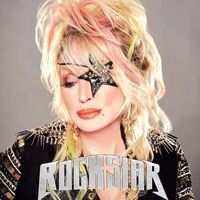
Rockstar
Dolly Parton
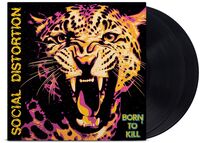
Born to Kill
Social Distortion

Ben
Macklemore
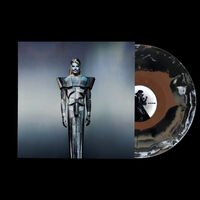
Adam
Adam Lambert
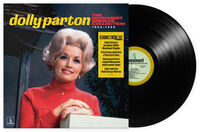
The Monument Singles Collection 1964-1968
Dolly Parton
Long Bed
Post Malone
Live From the Los Angeles Sports Arena, April 26th, 1975
Pink Floyd

