
1
Requiem, Op. 48-I. Introït Et Kyrie
2
Requiem, Op. 48-II. Offertoire
3
Requiem, Op. 48-III. Sanctus
4
Requiem, Op. 48-IV. Pie Jesu
5
Requiem, Op. 48-V. Agnus Dei
6
Requiem, Op. 48-VI. Libera Me
7
Requiem, Op. 48-VII. in Paradisum
8
Gloria-I. Gloria
9
Gloria-II. Laudamus Te
10
Gloria-III. Domine Deus
11
Gloria-IV. Domine Fili Unigenite
12
Gloria-V. Domine Deus, Agnus Dei
13
Gloria-VI. Qui Sedes Ad Dexteram Patris
Item UPC: 0747313916689
Date First Available:
Label: SWRMUSIC
Radio-Sinfonieorchester Stuttgart Des SWR
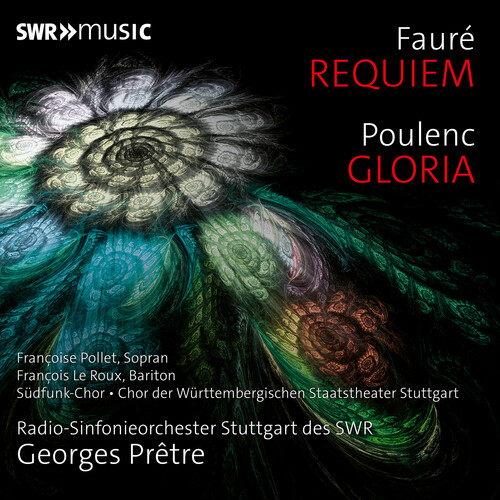
Faure: Requiem & Poulenc: Gloria
Pick from
2 formats and editions
Starting at
CD
Unavailable
CD
Unavailable
ABOUT THE ALBUM
What distinguishes Fauré's Requiem from numerous other settings of the requiem text is it's rather intimate, restrained, almost chamber-music nature, a "lullaby of death", as it has also been called, initially more as a criticism of a work that for most of the time avoids depicting the dread of death and the Last Judgement. Fauré's reply "But this is how I feel about death: as a happy liberation, as a striving for happiness in the hereafter rather than as a painful transition", not only perfectly describes essential characteristics of his Requiem, but also reveals it to be a very personal expression of the composer's very own artistic nature.Two generations after Fauré (and Fauré's grand-disciple through his teacher Koechlin), Francis Poulenc's (1899-1963) displayed a significantly different approach to religion. Poulenc, who like Fauré was from the southern part of France, had been shaped by his homeland in the sense of a 'rural', intense but joyous Catholicism. He regarded his Gloria as a more joyful counterpart to some of his other sacred works, and it is in this spirit that the first movement, begins in a festive mood with a striking, fanfare-like motif in the full orchestra. If Poulenc cited Gozzoli frescoes with monks sticking out their tongues and Benedictine monks playing football as the source of inspiration for his Gloria, then nowhere is this more immediately comprehensible than in the second movement, with it's rhythmically pointed Laudamus te, of the choir. In both the opera house, and concert hall, Prêtre's interpretations were notable for their full-blooded and highly romantic character; in style, they were often different from those of French conductors of the previous generation. He was an effective conductor not only of the French repertoire, but also of the music of Italy, and Germany, a fact reflected by the admiration in which he was held in both countries. A highly experienced and polished recording artist, Prêtre had many years' experience of working in the studio. His discography was large. Especially important were his recordings of the music of Poulenc.
Check out these titles
A-Meow-Zing Music
Gabby's Dollhouse: The Movie / O.S.T.
Willoughby Tucker, I'll Always Love You
Ethel Cain
A Matter of Time: Live at Madison Square Garden
Laufey
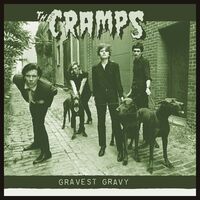
Gravest Gravy
Cramps
Preacher's Daughter
Ethel Cain

Unto The Locust Reissue (15th anniversary)
Machine Head
Mutiny After Midnight
Johnny Blue Skies & the Dark Clouds
Confessions II
Madonna
Deadbeat
Tame Impala
son of dad
Stephen Wilson Jr.

