
1
Godzilla's Theme - (from "Godzilla vs. KIng Ghidorah")
2
Main Title
3
Take Shelter / Godzilla Vs. Super X
4
Japanese Army March
5
Godzilla's Exit
6
Ending
7
Scramble March
8
Bio Wars
9
Ending
10
Main Title / UFO Invasion
11
King Ghidorah Attacks Fukuoka
12
Get King Ghidorah
13
Main Title
14
Mahara Mothra
15
Mesa March
16
Rolling Title Ending
17
Mothra's Song
18
Main Title
19
G-Force March #1
20
Prologue / Main Title
21
Bass Island
22
Mogera vs. Spacegodzilla #2
23
Mogera vs. Spacegodzilla #3
24
Crystal
25
Main Title / Hong Kong's Destruction
26
Attack of the Super X III
27
Mesa Tank Super Freeze Attack
28
Requiem
29
Ending Title
30
Monster Zero March
Item UPC: 052824805620
Date First Available:
Label: GNP RECORDS
ABOUT THE ALBUM
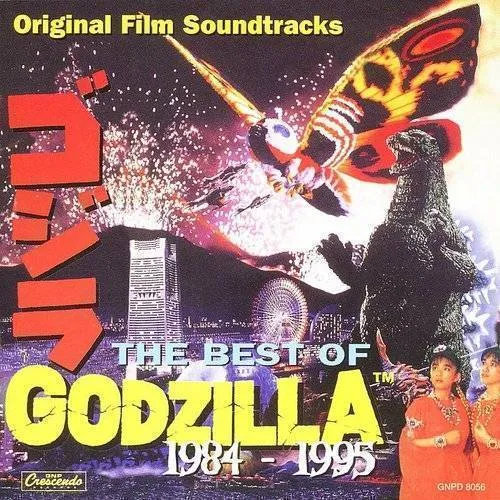
Godzilla, the beast that even a big-budget Hollywood stinkeroo couldn't kill, has been many things in his (her?) illustrious career: nuclear allegory, loving parent, neighborhood pest, property insurance exemption clause. But has-been? That's what many cynics were calling the Big Lizard by the late '70s. Resurrecting their cash, er, cow after a nine-year hiatus in the mid-'80s, Japan's Toho Studios wisely moved away from the tired stock footage, cheap effects, and kiddie-corn plot lines that had come to characterize the series, moving the final seven sagas back to the deadly-serious aesthetic of the original. Ironically, as Gojira's handlers got back to their cinematic roots, the films' music initially moved closer to the Hollywood mainstream, including healthy doses of heroic Korngold-esque romanticism and even screaming, diddly-squeak-school metal guitar. But after the more modern, if questionably effective efforts of Reijiroh Koroku and Kohichi Sugiyama (for Return of Godzilla and Godzilla vs. Biollante, respectively), Gojira music godfather Akira Ifukube returned to score four of the series' last five installments, truly bringing the saga full circle; the man who had musically brought the monster to life 41 years earlier was gratifyingly now allowed to write it's moving Requiem. The annotation and illustration (which equals the high standards of it's companion volume 1954-1975) are even more crucial here, as most of these "second cycle" films have seen but spotty distribution outside their native Japan.
Check out these titles
Mutiny After Midnight
Johnny Blue Skies & the Dark Clouds
Viagr Aboys
Viagra boys
Buzzkill (Rsd)
Locustz

Suicide Season
Bring Me The Horizon
Robin Trower Live 50th Anniversary Edition
Robin Trower
Shapes Of Midnight
Uncle Acid & The Deadbeats
Recovering the Satellites
Counting Crows
hara-kiri(Deluxe) -
honestav
son of dad
Stephen Wilson Jr.

Born to Kill
Social Distortion

